
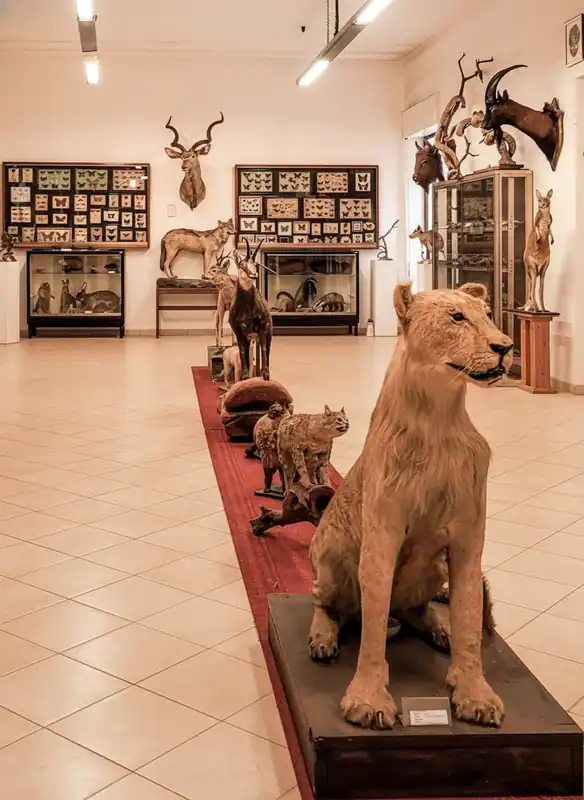
In the quiet streets of Sava, a town nestled in the Ionian hinterland of Puglia, an unexpected treasure awaits behind a historic façade. The Museo Missionario Cinese e di Storia Naturale bridges continents and centuries, weaving together the threads of Italian missionary work in China with the wonders of the natural world. It's a place where porcelain dragons meet Pugliese limestone, where ancient calligraphy shares space with taxidermied Mediterranean fauna.
Where Two Worlds Collide
Step through the doors and you're immediately transported. The museum's Chinese missionary collection is a window into a chapter of cultural exchange rarely explored in southern Italy. Delicate jade carvings, centuries-old manuscripts, traditional costumes, and devotional objects tell the story of Franciscan friars who traveled from this corner of Puglia to the far reaches of imperial China. Each artifact carries the patina of both devotion and distance, a tangible reminder of how deeply interconnected our world has always been.
The juxtaposition is striking: in one room, you're contemplating Ming Dynasty porcelain; in the next, you're examining butterflies native to the Ionian hills. This collision of the exotic and the local is precisely what makes the museum so compelling for visitors who crave depth beyond the beach.
Nature's Archive Under One Roof
The natural history wing is equally captivating. The collection showcases the biodiversity of Puglia and the broader Mediterranean basin through carefully preserved specimens. From the iridescent wings of local beetles to the skeletal architecture of regional birds, the displays illuminate the quiet drama unfolding in the countryside around Sava. It's a reminder that wonder doesn't always require a passport—sometimes it's thriving in the macchia mediterranea just beyond town.
- Chinese ceremonial robes embroidered with silk dragons and phoenixes
- Hand-painted scrolls depicting landscapes and religious scenes from the Qing Dynasty
- Preserved fauna including raptors, amphibians, and insects native to Puglia
- Missionary correspondence offering glimpses into 19th-century cross-cultural encounters
- Ornate devotional objects blending Italian Catholic and Chinese artistic traditions
Making the Most of Your Visit
The museum is intimate—plan for about an hour to absorb both wings at a contemplative pace. Because Sava is a working town rather than a tourist hub, you'll often have the galleries nearly to yourself, which adds to the meditative quality of the experience. The museum appeals to anyone with curiosity about cultural history, missionaries and explorers, or natural sciences, and it's especially rewarding for families looking to add educational depth to a beach-focused itinerary.
After your visit, take time to stroll Sava's centro storico, where Baroque churches and local cafés offer a taste of authentic Pugliese life. The town is also an ideal base for exploring the Ionian coast—Torre Colimena's beaches are just fifteen minutes away, and the ceramic workshops of Grottaglie are a short drive inland. Combine the museum with a morning at the sea and an afternoon in the studio districts for a day that balances mind, body, and craft.