
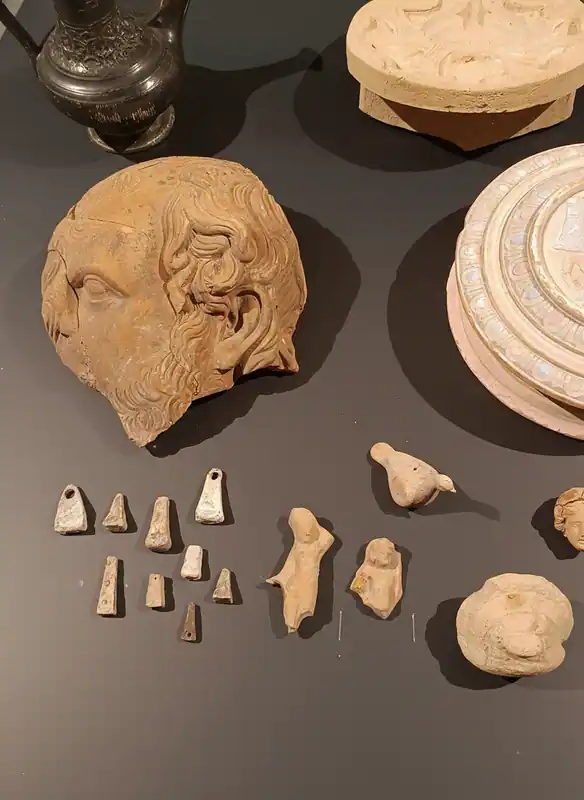
In the historic heart of Canosa di Puglia, a town whose roots stretch back to ancient Daunia, the Museo dei Vescovi Monsignor Francesco Minerva offers a rare window into the spiritual life that has shaped this corner of northern Puglia for centuries. Housed in a building that breathes history, the museum honors the legacy of Bishop Francesco Minerva while showcasing sacred art, liturgical vestments, and religious artifacts that tell the story of faith in a land where Christianity took root early and flourished.
A Bishop's Vision Preserved
Monsignor Francesco Minerva was more than a religious leader—he was a guardian of Canosa's cultural memory. This museum, dedicated to his life and work, gathers treasures that might otherwise have been scattered or lost. Walking through its rooms feels like stepping into a private chapel where every object has been chosen with care and reverence.
The collection spans centuries, from medieval manuscripts to baroque chalices, each piece a testament to the skill of craftsmen and the devotion of the faithful. The quiet halls invite contemplation, making this a space where history and spirituality intertwine.
Treasures That Speak Across Time
The museum's strength lies in its ability to make the past tangible. Here you'll encounter illuminated prayer books, intricately embroidered chasubles, silver reliquaries, and processional crosses that once led processions through Canosa's cobbled streets. Each artifact is contextualized, helping visitors understand not just what these objects are, but what they meant to the communities that created and cherished them.
- Liturgical vestments in silk and gold thread, revealing the artistry behind religious ceremony
- Illuminated manuscripts that showcase the intersection of faith and beauty
- Sacred vessels used in centuries of Eucharistic celebration
- Portraits and personal effects of Bishop Minerva himself
- Documentation of Canosa's ecclesiastical history through photos and archival materials
Beyond the Museum Walls
After exploring the museum, the town of Canosa di Puglia itself beckons. Just steps away, the Cattedrale di San Sabino rises with its Romanesque grandeur, while the nearby archaeological park reveals layers of Roman and early Christian history. The Tomb of Boemondo, a Norman prince, stands as a striking example of how this town has always been a crossroads of cultures.
For those drawn to ancient stones and sacred spaces, Canosa rewards slow exploration. The museum fits beautifully into a half-day itinerary that might include the cathedral, a walk through the old town's narrow streets, and perhaps a stop at a local trattoria where traditional Puglian dishes still taste like grandmother's kitchen.
Visitor Tips
The museum's intimate scale makes it ideal for a focused visit—budget about an hour to take in the collection thoughtfully. Photography policies vary, so ask at the entrance if you want to capture details. Since this is a small, specialist museum, it's worth checking current visiting arrangements before you go, especially outside peak tourist season.
The museum appeals naturally to those interested in religious art, local history, or the quieter side of Puglian culture. It's a place that rewards curiosity and offers a counterpoint to the region's sun-drenched beaches and bustling piazzas—a reminder that Puglia's treasures aren't only found along the coast.