
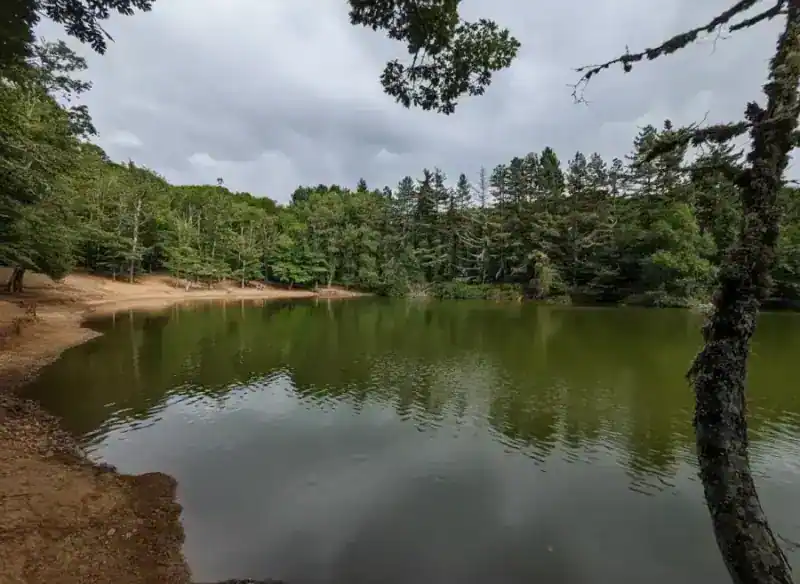
Tucked into the ancient Foresta Umbra near Monte Sant'Angelo, Laghetto Falascone d'Umbra is a freshwater jewel wrapped in silence and greenery. This small lagoon sits within the Parco Nazionale del Gargano, one of Puglia's most biodiverse protected areas, where beech forests give way to open wetlands that mirror the sky. Few visitors venture off the main mountain roads to find it, which makes every encounter feel like a private discovery.
A Wetland Oasis in the Heart of the Gargano
The lagoon itself is modest in size, fringed by reeds and aquatic grasses that whisper in the breeze. What makes Laghetto Falascone special is the ecosystem it sustains dragonflies skim the water's surface, amphibians call from the shallows, and migratory birds pause here during spring and autumn passages. The surrounding woodland is cool even in summer, offering a natural air-conditioning that's rare along Puglia's sun-baked coast.
Footpaths loop through the reserve, some boardwalked over marshy ground, others winding beneath centuries-old trees. The contrast between dense forest and open water creates shifting light patterns that photographers and nature lovers treasure.
Birdwatching and Quiet Contemplation
Bring binoculars if you're a birder Laghetto Falascone is a stopover for herons, warblers, and woodpeckers. Early morning is prime time, when mist still clings to the water and the forest is alive with song. Even if you're not counting species, the stillness here is restorative, a counterpoint to the bustle of coastal towns like Vieste or Peschici a half-hour drive away.
- Dawn visits offer the best wildlife sightings and softest light
- Sturdy shoes are essential some trails can be damp even in dry months
- Pack water and snacks; there are no facilities within the reserve
- Combine your visit with a drive through the Foresta Umbra scenic route
- Respect the silence this is a protected habitat, not a picnic ground
Linking Nature and Pilgrimage
Monte Sant'Angelo itself is famous for the Santuario di San Michele Arcangelo, a UNESCO World Heritage pilgrimage site carved into the mountain. After exploring the spiritual depths of the sanctuary, the lagoon offers a meditative counterpart a place to breathe deeply and reconnect with the natural world. The town's narrow stone streets and medieval architecture provide a compelling cultural layer to a day spent in nature.
Late spring and early autumn strike the best balance: wildflowers edge the trails, temperatures are gentle, and the lagoon reflects the changing seasons in vivid detail. Winter can be stark and beautiful, though access roads may be slick. Summer brings warmth, but the forest canopy keeps the worst heat at bay.